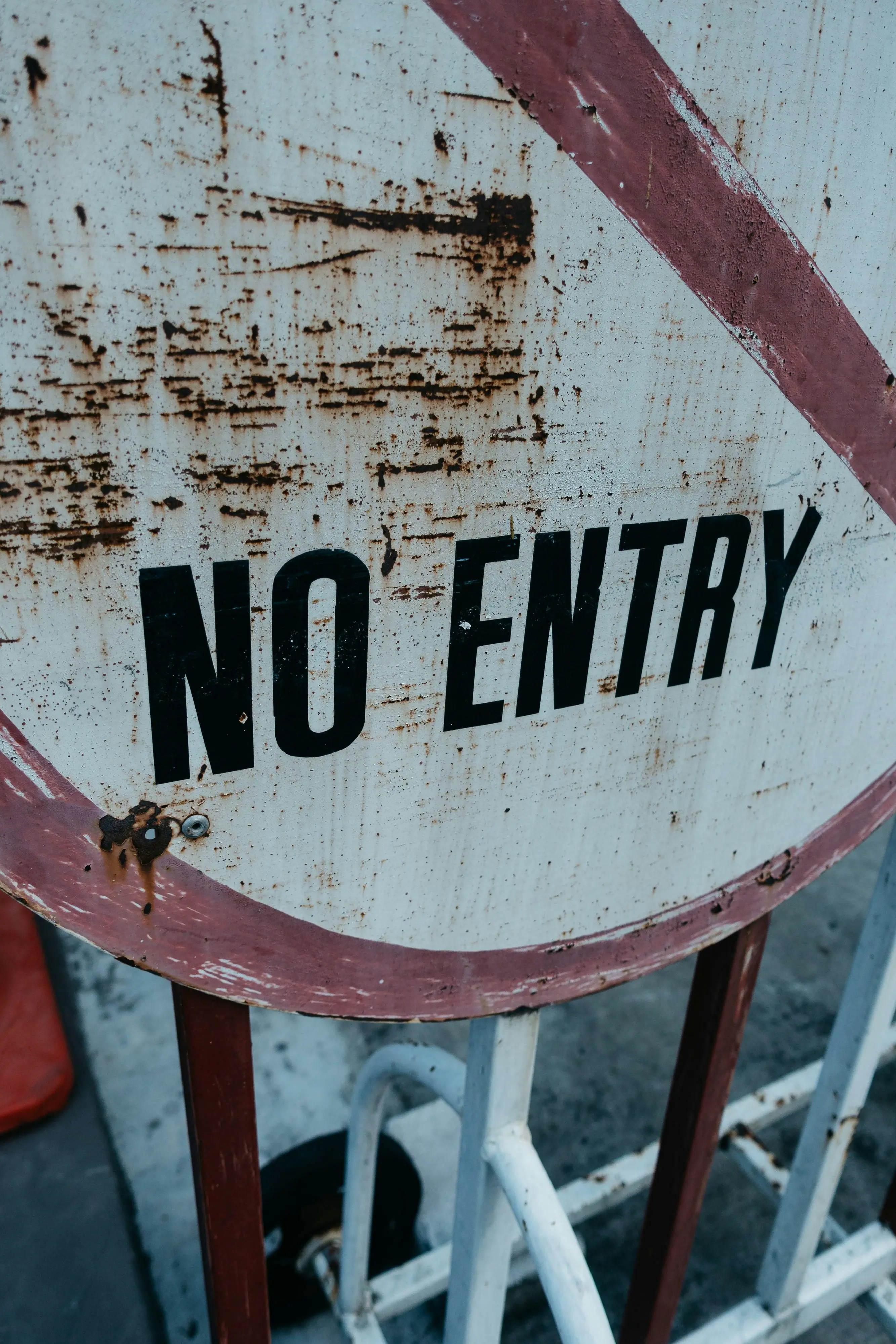
Yes, you can be refused entry to Thailand if you cannot show sufficient funds when asked by an immigration officer. The requirement is not new, not rumour and not informal. It is grounded in a Notification of the Ministry of Interior dated 8 May 2000 and is explicitly published on the official website of the Royal Thai Embassy in Washington DC. What complicates the picture is that the information is inconsistent depending on which official source you check. Some Thai embassy websites publish the requirement clearly. Others make no mention of it at all. Foreign government travel advisories including the UK's FCDO page omit it entirely. This post explains exactly what the rule is, what official sources actually say, who is most likely to be checked, and what to carry to protect yourself at the border.
The Official Rule: What Thai Law Actually Says
The legal basis for the proof of funds requirement is the Notification of the Ministry of Interior dated 8 May 2000. Under that notification, as cited by the BLS official Thai visa application service which handles Thai visa applications in multiple countries on behalf of the Thai government, the requirements are as follows:
- Holders of a tourist visa or those entering under the visa exemption scheme must be able to prove adequate finances of at least 20,000 Baht per person or 40,000 Baht per family.
- Visa on arrival holders must be able to prove adequate finances of at least 10,000 Baht per person or 20,000 Baht per family.
These figures apply regardless of nationality, length of stay or how many times you have previously visited Thailand. The checks are carried out by Thai immigration officers at ports of entry and are discretionary rather than universal. Not every traveller is asked. However, if you are asked and cannot satisfy the requirement, the officer has the legal authority to refuse your entry.
The Royal Thai Embassy in Washington DC publishes this requirement on its official website at thaiembdc.org, stating clearly: "Travelers entering Thailand under the Tourist Visa Exemption Scheme must possess adequate cash of or equivalent to 20,000 Baht per person or 40,000 Baht per family." This is an official Thai government diplomatic mission confirming the rule in direct, unambiguous language.
Why the Information Varies: Conflicting and Missing Guidance
If you have searched for this requirement online you will have found conflicting answers, and the conflict is not simply between bloggers and official sources. It exists between official sources themselves.
The Royal Thai Embassy in Bern, Switzerland, at thaiembassy.ch, does not mention the 20,000 Baht requirement on its visa pages. Their guidance covers visa types, the mandatory Thailand Digital Arrival Card requirement, and application procedures, but publishes no specific proof of funds figure. They direct applicants to the central Thai e-Visa portal at thaievisa.go.th.
The Royal Thai Embassy in Ottawa, Canada, at ottawa.thaiembassy.org, similarly does not publish the specific proof of funds figure on the visa pages available. Their content addresses visa categories, exemptions and application procedures without stating the 20,000 Baht threshold.
The UK Foreign Commonwealth and Development Office, whose Thailand entry requirements page at gov.uk is the official guidance for British travellers, makes no mention of the 20,000 Baht rule at all. The FCDO page covers passport validity, the Digital Arrival Card, yellow fever vaccination and overstay penalties, but omits any reference to proof of funds.
This inconsistency is not new. It has been noted by multiple sources familiar with Thai immigration, including a comment on the Ask.in.th community platform from a user with direct knowledge of Thai embassy operations: "Some Thai embassy websites still publish 10,000 THB per person. They do not communicate with Immigration, which is a different ministry, so some information never gets updated." That observation helps explain why different embassies publish different figures or none at all.
The practical conclusion is straightforward: the absence of the requirement from a foreign government travel advisory or from a specific Thai embassy website does not mean the requirement does not exist. It means that particular source has not published it. The requirement exists in Thai law regardless of whether any given website mentions it.
What Is Required to Enter Thailand as a Tourist
Setting aside the proof of funds question for a moment, the complete list of entry requirements for tourists entering Thailand, confirmed by the UK FCDO, the Royal Thai Embassy Washington DC and the official TDAC portal, is as follows:
- Valid passport: Your passport must have at least 6 months of validity remaining from your date of entry into Thailand and must contain at least one completely blank visa page.
- Thailand Digital Arrival Card (TDAC): From 1 May 2025, all foreign nationals entering Thailand by air, land or sea must complete a TDAC online within 3 days before arrival. The form is submitted at tdac.immigration.go.th and is free of charge. Do not use any website that charges a fee for this service.
- Proof of onward or return travel: You must be able to demonstrate that you will depart Thailand before or by the date your permitted stay expires. Airlines commonly check this before allowing boarding.
- Proof of funds: 20,000 Baht per person or 40,000 Baht per family if entering under visa exemption or on a tourist visa. 10,000 Baht per person or 20,000 Baht per family if entering on a visa on arrival. This check is discretionary.
- Yellow fever vaccination certificate: Required only if you are arriving from a country classified as a yellow fever transmission risk area. Most travellers arriving from Europe, North America or Australia are not affected by this requirement.
Do Tourist Visa Holders Need to Show 20,000 Baht?
Yes. The proof of funds requirement under the Ministry of Interior notification applies to holders of a tourist visa (category TR) in exactly the same way as it applies to visa-exempt visitors. Both categories are subject to the 20,000 Baht per person threshold. Holding a pre-approved tourist visa does not exempt you from demonstrating financial means if an officer chooses to check.
Visa on arrival holders are subject to the lower threshold of 10,000 Baht per person or 20,000 Baht per family, as confirmed by the BLS authorized Thai visa application service citing the Ministry of Interior notification directly.
Long-stay visa categories carry significantly higher financial requirements. The Non-Immigrant O-A retirement visa requires evidence of funds of at least 800,000 Baht. The Destination Thailand Visa requires evidence of at least 500,000 Baht. Those requirements are separate from the arrival cash rule and are verified at the point of visa application rather than at the immigration counter.
Does It Have to Be Cash?
This is where official guidance is clearest and most helpful. In December 2025, Phuket Immigration officials issued a statement, reported by Siam Legal Phuket, confirming that physical cash is not the only acceptable form of proof. Acceptable documentation confirmed by Phuket Immigration includes internationally recognised credit cards with available credit limits, debit cards linked to accounts with sufficient balances, prepaid travel cards showing adequate funds, and mobile banking applications that can verify account balances. Cryptocurrency holdings are explicitly not accepted.
However, there is a practical caveat. Multiple reports from travellers who have been asked at the immigration counter suggest that some officers prefer or insist on physical cash rather than digital evidence. There is also a privacy consideration: showing a banking application to an officer at a counter exposes your account details unnecessarily. Cash in Baht or an equivalent foreign currency remains the simplest and most universally accepted form of proof if you are checked.
If you bring foreign currency rather than Thai Baht, bring slightly more than the minimum equivalent to account for exchange rate differences at the time of the check.
Who Is Most Likely to Be Checked
Checks are selective and risk-based, not random in the pure sense. Based on guidance from multiple immigration-adjacent sources, the travellers most likely to be asked to show proof of funds are those who:
- Have a history of extended stays in Thailand using consecutive visa exemptions
- Are arriving on a one-way ticket with no confirmed onward travel
- Have entered Thailand more than twice in the current calendar year through land border crossings
- Have an unclear or inconsistent stated purpose of visit
- Have previously overstayed a permitted period
First-time visitors arriving by air at major airports with a return ticket, a hotel booking and a clear travel itinerary are significantly less likely to be asked. However, being unlikely to be checked is not the same as being exempt from the requirement. The officer at the counter has full discretion.
It is worth noting that land border crossings have historically involved stricter scrutiny than air arrivals. Multiple sources including the BLS authorized visa service confirm that checks are more commonly applied at land crossings than at international airports.
Non-Immigrant Visa Holders: A Different Set of Rules
The 20,000 Baht border cash requirement set out in the Ministry of Interior Notification dated 8 May 2000 applies specifically to tourist visa holders and visa-exempt visitors. It does not apply in the same way to holders of a Non-Immigrant visa, including the Non-Immigrant O visa issued on the basis of marriage to a Thai national.
The reason is straightforward. When a Non-Immigrant O visa is issued, the applicant has already demonstrated financial eligibility to the issuing embassy or consulate as part of the application process. Financial viability has been assessed before travel, not at the border on arrival. A report on the December 2025 Don Mueang Airport denial case published by LoyaltyLobby noted this distinction explicitly, stating that those travelling on actual visas "have different requirements and are able to show their financial viability to the embassy with a bank statement during the application process."
For holders of a Non-Immigrant O marriage visa, the financial requirements that matter are those applied at the annual extension stage, not at the port of entry. According to Thailand Law Online and Thai Visa Services, the financial requirement for an annual extension of stay based on marriage is either a deposit of at least 400,000 Baht in a Thai bank account maintained for at least two months before the extension application, or a verified monthly income of at least 40,000 Baht. These figures are assessed by the immigration officer at the time of the extension application, not when crossing the border.
Multiple Entry on a Non-Immigrant O Visa versus the METV
There is an important distinction that causes confusion. A Non-Immigrant O visa can be issued with multiple entry permission, or a holder can purchase a re-entry permit allowing them to leave Thailand and re-enter without losing their extension of stay. When a Non-Immigrant O holder re-enters Thailand on a valid visa with a re-entry permit, they are re-entering on a Non-Immigrant visa. The 20,000 Baht tourist cash requirement does not specifically apply to them. Their financial eligibility was established at the extension stage.
The Multiple Entry Tourist Visa, known as the METV, is an entirely separate product. It is a tourist visa under category TR. Holders of an METV are entering Thailand as tourists on each entry and are therefore subject to the same 20,000 Baht proof of funds requirement that applies to any other tourist visa holder.
If you are unsure which visa category applies to your situation, or if you are planning to apply for a Non-Immigrant O marriage visa and want to understand the financial requirements at each stage, contact our team. We assist clients in Surin and surrounding provinces with Non-O applications, annual extensions and the documentation required at each stage.
What Happens If You Overstay
While not directly related to the proof of funds question, overstaying your permitted period in Thailand carries serious consequences confirmed by the UK FCDO. The fine is 500 Baht for each day of overstay up to a maximum of 20,000 Baht. Beyond the financial penalty, overstayers risk detention, deportation at their own expense, and a ban from re-entering Thailand for up to 10 years. The FCDO notes that conditions in immigration detention centres can be harsh.
What to Carry: A Practical Summary
Based on everything confirmed from official sources, here is what to have ready when entering Thailand as a tourist:
- Your original passport with at least 6 months of remaining validity and at least one blank page
- Your TDAC QR code, completed online within 3 days before arrival at tdac.immigration.go.th, free of charge
- A printed or digital return or onward ticket confirming you will leave Thailand before your permitted stay expires
- At least 20,000 Baht per person or 40,000 Baht per family in cash or equivalent foreign currency, or a credit card or bank card with clearly accessible funds at that level
- A hotel booking or accommodation confirmation for at least the first few days of your stay
None of the above is unusual or difficult to prepare. The travellers who encounter problems at the border are typically those who have not thought about the funds requirement because neither their travel agent nor their government's travel advisory mentioned it.
If you have questions about how these entry requirements interact with your visa situation, or if you are planning a long stay and need help choosing the right visa category, contact our team. We are based in Surin, Thailand and work with clients on all aspects of Thai immigration compliance.
This post contains affiliate links. We may earn a commission if you purchase through our links, at no extra cost to you.
Travelling to Thailand? Health insurance is required for certain visa categories and strongly recommended for all visitors. SafetyWing offers flexible travel medical cover that you can activate online before departure, with no fixed contract period and coverage that works across Thailand and beyond.
Get a SafetyWing QuoteQuestions About Your Thai Visa or Entry Requirements?
We assist expats and long-stay visitors in Surin, Buriram and surrounding provinces with visa applications, extensions, retirement visas and documentation. Your first consultation is free.
Book a Free Consultation